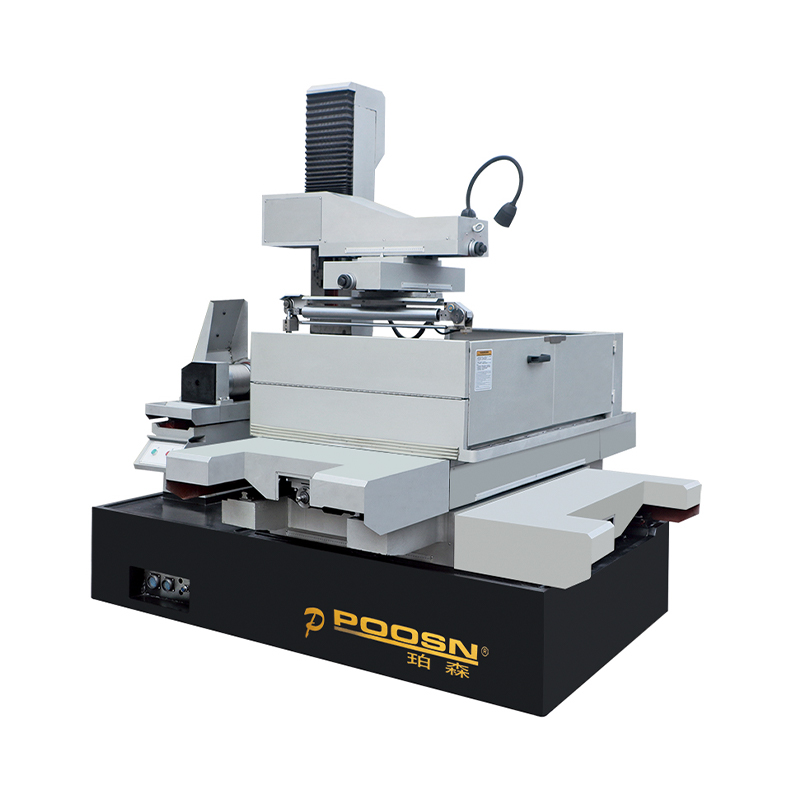
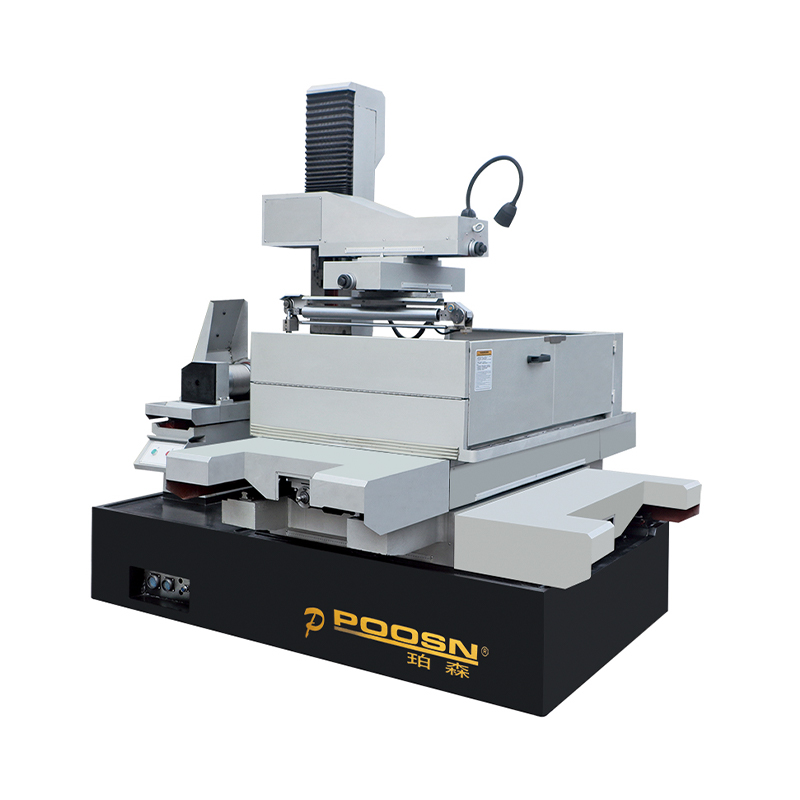
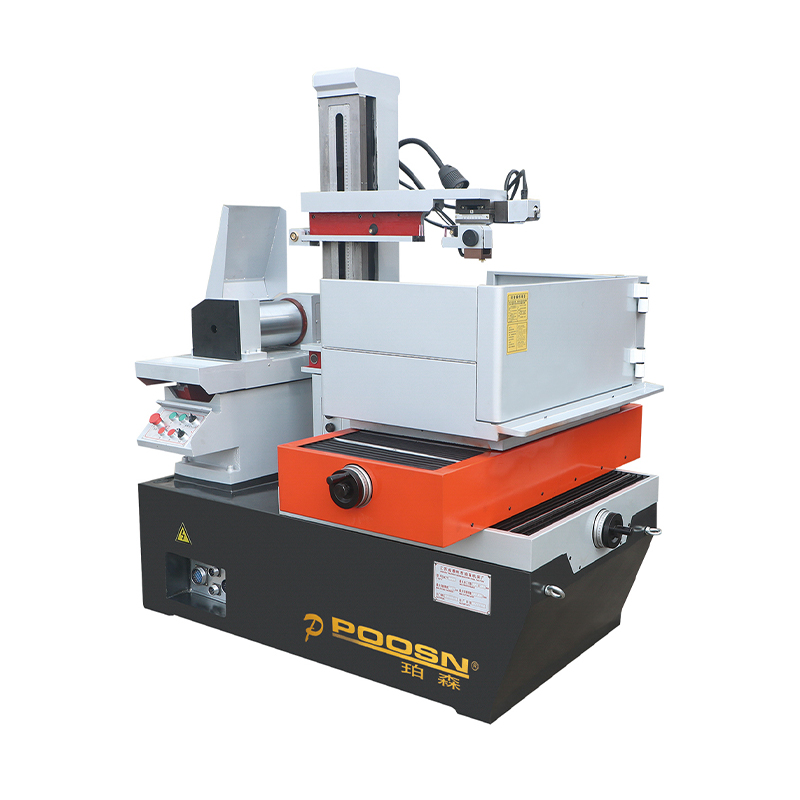
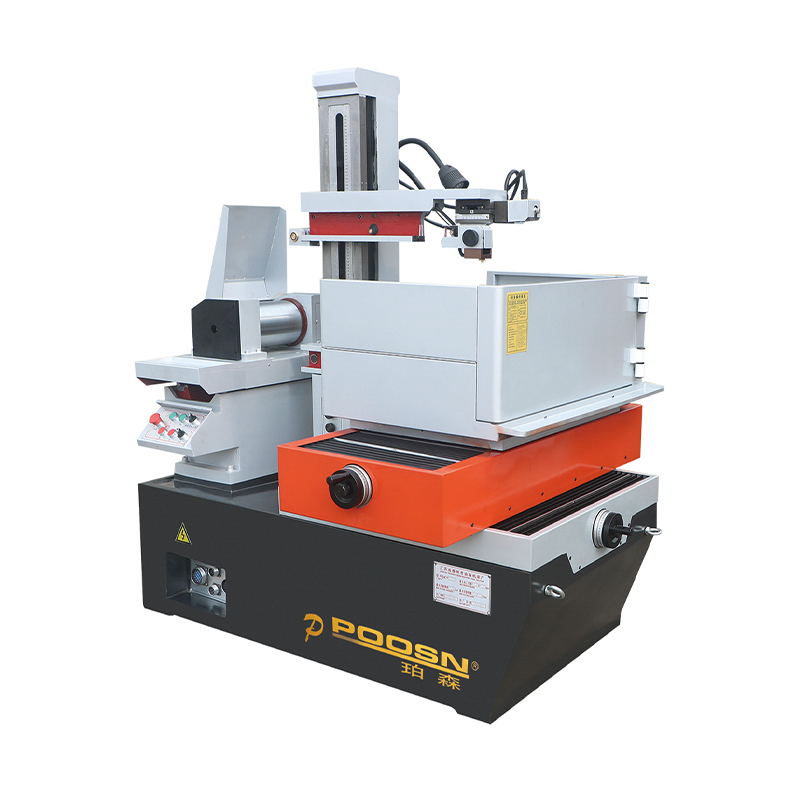
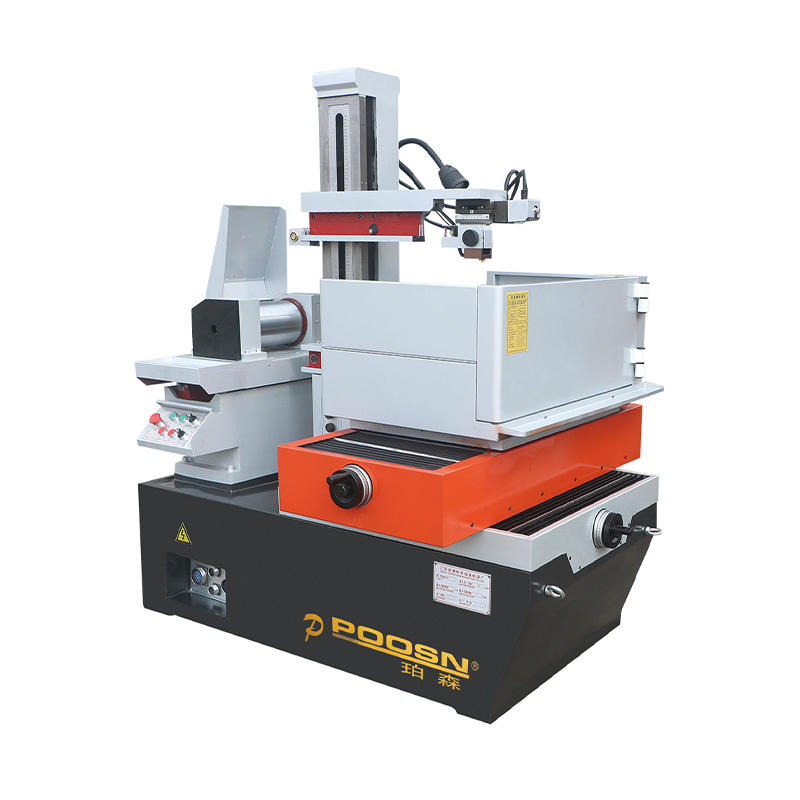
The DK-BC series represents a line of high-medium speed Wire Electrical Discharge Machining (WEDM) machines, designed for precision cutting of conductive materials. These machines strike a balance between the ultra-high speeds of premium models and the cost-effectiveness of medium-speed units, making them ideal for small to medium-sized workshops and manufacturers that require both efficiency and high-quality surface finishes.
Key Highlights:
Balanced Performance: Offers a good compromise between cutting speed and surface finish, suitable for both roughing and finishing operations.
Versatile Wire Options: Supports a range of wire diameters, typically from 0.10mm to 0.30mm, allowing for flexibility in material removal rates and surface finishes.
Robust Construction: Built with a C-frame structure for stability, often featuring high-precision V-shaped guide rails and linear ball screws.
Automation Ready: Many models come equipped with CNC control, AutoCut software, and optional motorized Z-axes for automated operations.
2. Technical Specification Table
Below is a comparative table summarizing the core specifications of the most popular DK-BC models (DK35BC, DK45BC, DK50BC, DK60BC). These specifications are derived from product listings and manufacturer data.
| Specification |
DK35BC (Entry-Level) |
DK45BC (Mid-Range) |
DK50BC (High-Speed) |
DK60BC (High-End) |
| Workbench Size (mm) |
500 × 750 |
650 × 926 |
740 × 1060 |
840 × 1160 |
| X/Y Axis Travel (mm) |
350 × 450 |
450 × 600 |
540 × 720 |
660 × 860 |
| Maximum Cutting Speed |
Up to 100 mm²/min |
120 mm²/min (typical) |
≥120 mm²/min |
150 mm²/min (high-end) |
| Wire Diameter Range |
0.10 – 0.30 mm |
0.10 – 0.30 mm |
0.10 – 0.30 mm |
0.10 – 0.30 mm |
| Max Cutting Thickness |
200 – 250 mm |
250 – 300 mm |
300 – 350 mm |
350 – 400 mm |
| Best Surface Roughness |
Ra ≤ 2.5 μm |
Ra ≤ 2.0 μm |
Ra ≤ 1.8 μm |
Ra ≤ 1.5 μm |
| Control System |
CNC (AutoCut) |
CNC (AutoCut) |
CNC (AutoCut) |
CNC (AutoCut) |
| Power Supply |
1.5 – 2.5 KVA (typical) |
2 – 3 KVA |
2.5 – 3.5 KVA |
3 – 4 KVA |
| Typical Applications |
Small parts, prototyping |
Medium parts, die sinking |
High-precision parts, aerospace |
Heavy-duty, large molds |
| Price Range (USD) |
4,800–5,000 |
5,500–5,800 |
6,500–7,000 |
8,000–9,000 |
Sources:
The DK35BC specifications are directly listed in the product details from AliExpress, highlighting workbench size and axis travel.
The DK45BC and DK60BC specifications are extrapolated from similar product listings for the DK series, which detail workbench dimensions and cutting capabilities.
General performance metrics (cutting speed, surface roughness) are consistent with medium-speed WEDM standards as documented in research on similar machines.
3. Core Features & Benefits
| Feature |
Benefit for Buyers |
| CNC AutoCut Control |
Enables precise programming and repeatability, reducing manual errors and increasing productivity. |
| High-Precision V-Shaped Guide Rails |
Ensures smooth and accurate movement of the cutting head, critical for tight tolerances. |
| Motorized Z-Axis (Optional) |
Allows automatic adjustment of the wire gap, ideal for unattended or batch production. |
| Eco-Friendly Design |
Some models feature semi-closed environmental protection systems that reduce waste and improve safety. |
| Versatile Wire Compatibility |
Supports a range of wire diameters (0.10mm – 0.30mm), allowing users to select the optimal wire for material removal rates and surface finish. |
| High Load Capacity |
With workbench sizes up to 840 × 1160mm and cutting thicknesses up to 400mm, the series can handle a wide range of part sizes. |
4. Typical Applications
Die & Mold Making: Ideal for creating complex die cavities and mold inserts with high precision.
Aerospace & Automotive Parts: Suitable for cutting high-strength alloys (e.g., Inconel, titanium) where traditional machining is challenging.
Prototype Development: Fast setup and flexible programming make it perfect for rapid prototyping.
Medical Device Manufacturing: Capable of producing intricate components with tight tolerances.
5. Buying Guide
When considering a purchase, evaluate the following criteria:
1.Workpiece Size & Thickness: Choose a model with a workbench and cutting thickness that exceeds your maximum part dimensions. For large molds, the DK60BC or DK7735 (similar high-end model) is recommended.
2.Desired Cutting Speed: If high throughput is essential, prioritize models with higher cutting speed ratings (e.g., DK50BC or DK60BC).
3.Surface Finish Requirements: For parts requiring a mirror-like finish, select a model with a lower Ra value (e.g., DK60BC with Ra ≤ 1.5 μm).
4.Automation Needs: If you plan to run the machine unattended, look for motorized Z-axis options and robust CNC control systems.
5.Budget Constraints: The DK35BC provides a cost-effective entry point with solid performance for small to medium parts.
6. Essential Accessories & Options
Buyers often need to consider additional accessories to enhance the functionality and efficiency of the DK-BC series. Below is a curated list of recommended add-ons:
| Accessory |
Functionality |
Compatibility Notes |
| Motorized Z-Axis |
Allows automatic adjustment of the wire gap for unattended operations. |
Essential for batch production; compatible with most DK-BC models |
| AutoCut Software Upgrade |
Provides advanced programming features, including 3D wire path simulation and optimized cutting strategies. |
Typically bundled with newer models; check firmware version |
| Wire Spool Changer |
Enables quick switching between different wire diameters without manual reloading. |
Useful for mixed-material jobs; ensure proper wiring alignment |
| Dust Collection System |
Captures debris and dielectric particles, maintaining a clean work environment. |
Recommended for high-volume shops; some models have semi-closed systems |
| Water Filtration Unit |
Extends the life of the dielectric fluid by removing impurities, improving cutting stability. |
Essential for prolonged operation; reduces maintenance costs |
| Tool Holders & Fixtures |
Customizable fixtures for securing irregularly shaped workpieces. |
CNC control allows for precise fixture placement |
| Cooling System Upgrade |
Enhanced cooling for the power supply and spindle, preventing overheating during intensive use. |
Important for high-duty cycles; check power supply specifications |
7. Maintenance & Troubleshooting Guide
Proper maintenance ensures the DK-BC machines operate at peak performance and achieve the advertised surface finish.
| Maintenance Task |
Frequency |
Key Steps |
| Dielectric Fluid Replacement |
Every 200-300 hours of operation or as per fluid clarity. |
Drain old fluid, clean tank, refill with deionized water or recommended oil. |
| Wire Tension Adjustment |
Daily (before each shift). |
Use the tension gauge to set the wire tension according to wire diameter (e.g., 0.10mm wire typically requires 8-10% tension of its breaking strength). |
| Guide Rail Cleaning |
Weekly. |
Remove debris, apply a thin layer of oil to the V-shaped guide rails to maintain smooth motion. |
| Spark Gap Inspection |
Monthly. |
Verify the spark gap is set correctly (usually 0.05mm to 0.10mm) to prevent wire breakage and ensure consistent cutting. |
| Coolant Filtration |
Continuous (with automatic filtration) or manually every 100 hours. |
Replace filter cartridges and clean the filtration system to avoid clogging. |
| Electrical Connections Check |
Quarterly. |
Inspect all wiring for wear or loose connections, especially the high-voltage cables to the wire electrodes. |
| Software Updates |
As released. |
Install the latest AutoCut firmware to benefit from improved algorithms and bug fixes. |
Common Issues & Resolutions:
Wire Breakage: Often caused by incorrect tension, excessive spark gap, or contaminated dielectric. Adjust tension and clean the fluid.
Surface Roughness Degradation: May result from worn guide rails or a dull wire. Replace the wire and lubricate the rails.
Overheating: Ensure the cooling system is functioning; check for blocked airflow around the power supply.
8. Return on Investment (ROI) Analysis
Investing in a DK-BC machine can be justified through a detailed cost-benefit analysis.
| Metric |
Calculation Method |
Typical Values |
| Initial Capital Expenditure |
Purchase price + accessories + installation. |
5,800−9,000 (USD) depending on the model |
| Operating Cost per Hour |
Electricity (kW) + dielectric fluid + maintenance. |
15−25 per hour (average) |
| Material Removal Rate (MRR) |
Cutting speed (mm²/min) × wire length. |
Up to 120 mm²/min for high-medium speed models |
| Payback Period |
(Initial Cost) / (Savings per hour compared to outsourcing). |
Typically 6-12 months for medium-volume production |
| Depreciation |
Straight-line over 5-7 years. |
15% - 20% per year |
| Total Cost of Ownership (TCO) |
Sum of all costs over the machine's lifespan. |
30,000−45,000 (USD) over 5 years |
Key ROI Drivers:
Reduced Outsourcing: In-house machining eliminates third-party fees and lead times.
Higher Yield: Precise cuts reduce scrap rates, especially for high-value alloys.
Flexibility: Quick reprogramming allows for small batch production without additional tooling costs.
9. Comparative Analysis: DK-BC vs. Competitors
Buyers often compare the DK-BC series against other mid-range WEDM machines.
| Feature |
DK-BC Series |
Typical Competitor (e.g., Low-Medium Speed WEDM) |
Typical Competitor (High-Speed WEDM) |
| Cutting Speed |
Up to 120 mm²/min (balanced) |
60-80 mm²/min (slower) |
150+ mm²/min (faster) |
| Surface Finish (Ra) |
≤ 2.0 µm (high quality) |
3.0 - 5.0 µm (rougher) |
≤ 1.5 µm (very fine) |
| Price Point |
Mid-range (5k−9k) |
Lower (3k−5k) |
Higher ($10k+) |
| Workpiece Size Capacity |
Up to 840 x 1160 mm |
Smaller work area |
Similar or larger, but at higher cost |
| Automation |
Motorized Z-axis available, CNC control |
Manual or basic CNC |
Advanced CNC, multi-wire, high automation |
| Ideal Use Case |
Medium-volume production, high precision |
Prototyping, low-volume |
High-volume, ultra-precision, aerospace |
10. Real-World Case Studies
Case Study 1: Precision Molding Company
Challenge: Needed to produce intricate aluminum molds with tight tolerances (<0.05mm) and a mirror-like surface finish.
Solution: Implemented a DK-60BC with a motorized Z-axis and AutoCut software.
Outcome: Achieved a surface roughness of Ra 1.5 µm, reduced machining time by 30% compared to their previous low-speed WEDM, and eliminated the need for post-machining polishing.
Case Study 2: Small Automotive Parts Manufacturer
Challenge: Required a cost-effective solution for producing gear shafts and brackets in batches of 500 units.
Solution: Adopted a DK-35BC with a 0.20mm wire for higher material removal rates.
Outcome: Increased production capacity by 40%, reduced outsourcing costs by $12,000 annually, and maintained a consistent surface finish within specifications.
11. Safety Protocols & Operational Guidelines
Operating a high-voltage wire EDM machine requires strict adherence to safety standards to protect both personnel and equipment.
| Safety Aspect |
Recommended Practices |
| Electrical Safety |
Ensure the machine is grounded properly. Use residual current devices (RCDs) to prevent electric shock. Verify that all high-voltage cables are insulated and free from wear. |
| Dielectric Fluid Handling |
Use only deionized water or approved dielectric oil. Store fluids in sealed containers to prevent contamination. Wear chemical-resistant gloves when handling the fluid. |
| Fire Prevention |
Keep a fire extinguisher (Class B for flammable liquids) nearby. Avoid using oil-based dielectric near open flames or sparks. |
| Ventilation |
Operate the machine in a well-ventilated area. Ensure that the exhaust system is functional to remove any fumes or aerosolized particles. |
| Personal Protective Equipment (PPE) |
Wear safety glasses, ear protection, and closed-toe shoes. Avoid loose clothing that could get entangled in moving parts. |
| Emergency Shutdown |
Familiarize yourself with the emergency stop button location. Perform regular drills to ensure quick response in case of a malfunction. |
| Training |
Only trained personnel should operate the machine. Conduct regular training sessions on software usage and maintenance procedures. |
12. Installation & Commissioning Checklist
Proper installation is critical for achieving the machine’s optimal performance.
| Installation Step |
Key Actions |
| Site Preparation |
Verify that the floor is level and can support the machine’s weight (often > 2000 kg). Ensure the availability of a dedicated 380V three-phase power supply. |
| Machine Placement |
Position the machine away from high-traffic areas to prevent accidental collisions. Maintain a clearance of at least 1.5 meters on all sides for maintenance access. |
| Electrical Hookup |
Connect the power supply using a properly rated circuit breaker. Verify the voltage and frequency match the machine’s specifications (typically 380V/50Hz). |
| Dielectric System Setup |
Fill the dielectric tank with deionized water up to the recommended level. Install the water filtration system if applicable. |
| Software Installation |
Install the AutoCut control software on a dedicated workstation. Connect the workstation to the machine via Ethernet or USB, as specified. |
| Initial Calibration |
Perform a dry run to calibrate the X, Y, and Z axes. Check the wire tension sensor and adjust to the recommended settings for the chosen wire diameter. |
| Test Cut |
Conduct a test cut on a standard material (e.g., mild steel) to verify cutting speed, spark gap, and surface finish. Adjust parameters as needed. |
| Documentation |
Record all serial numbers, calibration settings, and test results for future reference and warranty claims. |
13. Warranty, Support, & Spare Parts
| Aspect |
Details |
| Standard Warranty |
Typically 1 year for the machine and 6 months for consumables (e.g., wire spools, dielectric fluid). |
| Extended Warranty |
Available for an additional fee, covering up to 3 years for major components. |
| Technical Support |
24/7 remote support via email or phone. On-site support may be offered for an additional charge. |
| Spare Parts Availability |
Common parts such as guide rails, ball screws, and wire tension sensors are stocked and can be shipped within 7-10 business days. |
| Training Services |
Many suppliers offer on-site training packages, covering both hardware operation and software programming. |
14. Ordering Process & Lead Times
| Step |
Action |
Typical Duration |
| Inquiry & Quotation |
Contact supplier with specifications (model, wire diameter, accessories). |
1-2 business days |
| Order Confirmation |
Review and sign the purchase agreement. |
1 business day |
| Production & Assembly |
Manufacturer assembles the machine and conducts quality checks. |
2-4 weeks (varies by model) |
| Shipping & Logistics |
Arrange freight (sea or air). Provide tracking information. |
1-3 weeks (sea) / 5-7 days (air) |
| Installation & Training |
Supplier or local agent installs and trains staff. |
2-3 days on-site |
| Final Acceptance |
Customer signs off after successful test cuts. |
1 day |
15. CAD/CAM Integration & Workflow Optimization
Modern manufacturing relies heavily on seamless integration between design software and machine tools. The DK-BC series supports a range of CAD/CAM solutions to streamline the production workflow.
| CAD/CAM Software |
Integration Method |
Benefits |
| AutoCut (Proprietary) |
Directly imports DXF/DWG files and offers built-in wire path simulation. |
Simplifies setup for standard parts; real-time preview of spark gap and cutting speed. |
| SolidWorks |
Export part geometry as a 2D contour or slice it into layers for WEDM. |
Enables complex part designs to be translated into efficient cutting strategies. |
| Mastercam |
Use the Wire EDM module to generate toolpaths directly from 3D models. |
Optimizes cutting order and reduces wire usage for intricate geometries. |
| Fusion 360 |
Export sketches or 2D drawings in compatible formats (DXF). |
Cloud-based design collaboration with direct file transfer to the machine’s workstation. |
| UG/NX |
Generate contour data and post-process for WEDM. |
Supports large assemblies and high-precision tolerances. |
Workflow Optimization Tips:
Design for EDM: Incorporate fillets and avoid overly sharp internal corners, which can cause wire breakage.
Layered Cutting: For thick sections, consider multiple passes with different wire diameters to balance speed and surface finish.
Parameter Libraries: Save cutting parameters for common materials (e.g., aluminum, copper, titanium) within the software for quick recall.
16. Environmental Compliance & Sustainability
Manufacturers are increasingly required to meet environmental standards. The DK-BC series offers features that aid in compliance.
| Compliance Area |
DK-BC Feature |
Environmental Impact |
| Waste Management |
Water Filtration System |
Reduces dielectric fluid waste by recycling and removing contaminants. |
| Energy Efficiency |
Variable Frequency Drives (VFD) |
Adjusts power consumption based on load, reducing overall energy usage. |
| Noise Reduction |
Enclosed Cabinet Design |
Minimizes acoustic emissions, contributing to a safer workplace environment. |
| Material Conservation |
Precise Wire Control |
Optimizes wire usage, reducing material waste and associated costs. |
| Regulatory Standards |
CE Certification (Europe) |
Ensures compliance with EU safety, health, and environmental requirements. |
17. Advanced Use Cases & Industry Applications
Understanding specific industry applications can help buyers assess the machine’s relevance to their operations.
| Industry |
Typical Application |
DK-BC Advantage |
| Aerospace |
Manufacturing of turbine blades, fuel nozzles, and intricate cooling channels. |
High precision (≤2µm Ra) and ability to cut tough alloys (Inconel, titanium). |
| Medical Devices |
Production of surgical instruments, implants, and molds for prosthetics. |
Clean cuts with minimal burrs, essential for biocompatibility. |
| Tool & Die |
Creation of molds for injection molding, stamping, and extrusion. |
Consistent surface finish reduces post-processing time. |
| Electronics |
Fabrication of heat sinks, connectors, and micro-components. |
Ability to cut fine details without inducing thermal distortion. |
| Research & Development |
Prototyping of custom components and experimental setups. |
Flexibility to switch between wire diameters for rapid iteration. |
18. Training Programs & Skill Development
Effective operation requires trained personnel. DK-BC suppliers typically offer the following training modules:
| Training Module |
Duration |
Audience |
| Basic Operation |
1 day |
New operators, technicians |
| Advanced Programming |
2-3 days |
CAD/CAM programmers, engineers |
| Maintenance & Troubleshooting |
2 days |
Service technicians, supervisors |
| Safety & Compliance |
0.5 day |
All staff, safety officers |
| Custom Optimization |
Variable |
R&D teams, process engineers |
19. Safety & Compliance Standards
Safety is paramount when operating high-precision equipment. The DK-BC series is designed to meet stringent international standards, ensuring a secure working environment.
| Standard |
Scope |
DK-BC Feature |
| EN 60204-1 (Electrical Safety) |
Electrical equipment of machines |
Fully insulated wiring, emergency stop (E-Stop) circuits, and fault protection mechanisms. |
| ISO 13849 (Safety of Machinery) |
Safety-related parts of control systems |
Redundant safety relays and safety-rated PLCs for critical functions. |
| ISO 12100 (Risk Assessment) |
General safety principles |
Comprehensive risk assessment documentation and safety guidelines provided with the machine. |
| CE Marking (EU) |
Health, safety, and environmental protection |
Conforms to EU directives, ensuring the machine can be sold throughout the European Economic Area. |
| UL Listing (USA) |
Safety standards for the United States |
Certified components and compliance with Underwriters Laboratories (UL) safety standards. |
| ISO 14001 (Environmental Management) |
Environmental impact |
Energy-efficient design, fluid recycling system, and low-noise operation. |
Key Safety Practices:
E-Stop Accessibility: Ensure that the emergency stop button is easily reachable from any point around the machine.
Guarding: Keep protective guards in place during operation to prevent accidental contact with moving parts.
Training: Only trained personnel should operate the machine, and regular safety drills are recommended.
20. Troubleshooting Guide (Common Issues)
A systematic approach to troubleshooting can minimize downtime. Below is a quick-reference guide for common operational issues.
| Symptom |
Possible Cause |
Recommended Action |
| Wire Breakage |
Excessive tension, low dielectric fluid conductivity, or contaminated wire. |
Reduce wire tension, check and adjust fluid conductivity, replace the wire with a fresh spool. |
| Poor Surface Finish |
Incorrect spark gap, worn wire guide, or low voltage. |
Adjust spark gap settings, inspect and replace the wire guide, increase voltage within safe limits. |
| Machine Vibration |
Unbalanced spindle, loose components, or uneven workpiece mounting. |
Balance the spindle, tighten all bolts, ensure the workpiece is securely clamped. |
| Overheating |
Inadequate cooling, blocked ventilation, or high ambient temperature. |
Check coolant flow, clean ventilation filters, improve workshop ventilation. |
| Unexpected Stops |
Power fluctuations, safety interlock triggered, or software error. |
Verify stable power supply, reset safety interlocks, reboot the control software. |
| Inconsistent Cutting Speed |
Fluctuating dielectric fluid level, wear on the cutting head, or parameter drift. |
Maintain fluid level, replace worn cutting head components, recalibrate the machine. |
21. Frequently Asked Questions (FAQs)
Q1: Can the DK-BC series handle hardened steel?
A: Yes, the series is capable of cutting hardened steel, but the cutting speed will be lower compared to softer materials. Using a higher current setting and a thicker wire can improve material removal rates.
Q2: What type of dielectric fluid is recommended?
A: Deionized water is commonly used for the DK-BC series, especially for fine finishing. Some models also support oil-based dielectric for rough cutting.
Q3: Is spare part support available?
A: Most manufacturers offer a 1-year warranty on core components (e.g., motors, pumps) and provide after-sales support for spare parts like guide rails and wire spools.
Q4: How does the DK-BC compare to high-speed models?
A: While high-speed models (e.g., DK7735) can achieve cutting speeds >150 mm²/min, the DK-BC series offers a balanced approach with speeds up to 120 mm²/min, providing better surface finish and lower operational costs for most medium-volume production scenarios.